
Document Management System Best Practices: How Modern Organizations Capture, Manage, Secure, and Automate Business Information
Share this article:
Many organizations still manage critical business records across shared drives, inboxes, paper file rooms, network folders, legacy systems, and disconnected line-of-business applications. Contracts, invoices, HR records, case files, claims, customer correspondence, and compliance documents may exist somewhere in the organization—but finding the right version, proving who accessed it, routing it for approval, or applying the correct retention rule can become a daily operational burden.
A modern document management strategy is no longer just about storing files electronically. It is about capturing information at the point of origin, classifying it accurately, extracting useful data, routing it through automated workflows, securing access, and governing the full document lifecycle.
What Is a Document Management System?
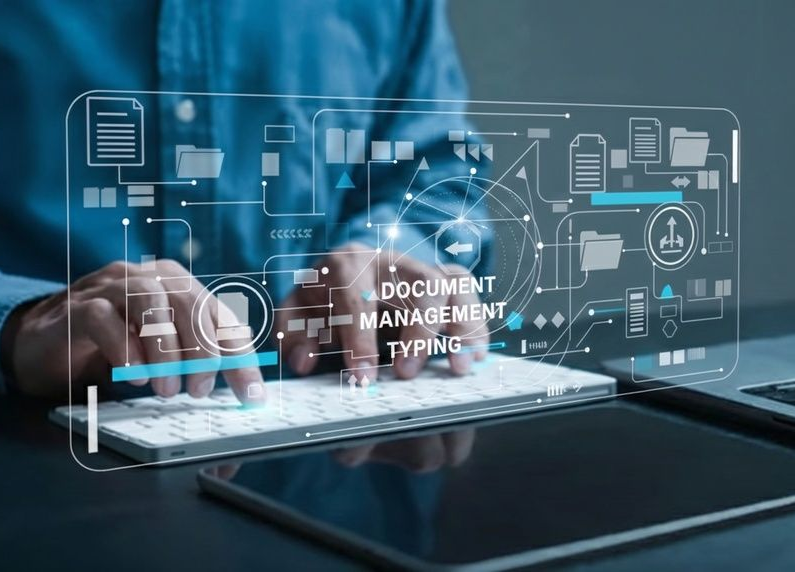
A document management system creates structure around how organizations store, access, manage, secure, and retain business information. Over time, these systems have evolved from early document imaging platforms into broader content management and enterprise content management (ECM) solutions. Today, a modern document management system often supports the full information lifecycle, including document capture, indexing, search, workflow automation, access control, audit history, records retention, and integration with other business applications.
Key Functions of a Modern Document Management System
Modern document management systems help organizations control documents and related business information throughout the content lifecycle. Common capabilities include:
- Centralized storage for business records
- Document capture, scanning, and import from multiple sources
- Indexing, metadata, and search for faster retrieval
- Role-based access controls for secure document access
- Version control and audit history
- Workflow routing for reviews, approvals, and exception handling
- Records retention and lifecycle management
- Integration with ERP, CRM, HR, finance, case management, and other business systems
In many organizations, document management capabilities are delivered as part of a broader
enterprise content management, content services, or workflow automation strategy that connects information across departments and line-of-business applications.
Common Challenges Businesses Face Without One
Organizations without a structured document management system often experience:
- Duplicate records across multiple locations
- Delayed approvals during routine workflows
- Inconsistent naming across stored files
- Limited visibility into document history
These issues can slow operations, complicate compliance efforts, and create unnecessary administrative work across departments.
Effective Document Management Starts at Capture
Before documents can be managed effectively, they must be captured accurately, classified consistently, and routed to the right business process. For many organizations, documents arrive through scanners, multifunction devices, email attachments, fax servers, web portals, shared folders, and legacy archives. Without a disciplined capture strategy, even the best document management system can become another digital filing cabinet.
IDT helps organizations address this front-end challenge through
document scanning and digitization, media conversion,
OCR,
ICR, intelligent document processing, fax and email capture, and integration with platforms such as Hyland OnBase, Microsoft 365 SharePoint, and other enterprise systems.
Document Management System Best Practices
Effective information governance begins with practical operating standards that create accountability, visibility, and reliable control across business records.
Use AI-Driven Intelligent Document Processing Where It Adds Measurable Value
Modern document management is increasingly connected to Intelligent Document Processing. AI-driven documents extract key data, validate information, and prepare records for downstream workflows. This is especially valuable for high-volume or repetitive processes such as accounts payable, claims processing, HR onboarding, loan documentation, patient intake, sales orders, and government records.
IDT’s CAPSYS AcuityAI™ and CAPSYS CAPTURE ONLINE offerings help organizations capture structured, semi-structured, and unstructured information and move it into business systems with greater speed, consistency, and control.
Centralize and Organize Documents
A centralized document repository reduces confusion caused by scattered storage across shared drives, desktops, email threads, and paper files. Organized folder structures and standardized classification methods help teams retrieve records faster, clarify ownership, and reduce delays during audits, approvals, customer requests, and internal operational reviews.
Standardize Naming Conventions and Metadata
Consistent naming conventions and metadata tagging create clearer document organization across departments. Standardized indexing reduces duplicate records, improves search accuracy, and helps employees locate files more efficiently during compliance reviews, service inquiries, case processing, reporting, and day-to-day business operations.
Implement Role-Based Access Control (RBAC)
Role-based access control limits document visibility according to employee responsibilities and departmental requirements. Structured permissions help organizations protect financial records, legal files, HR information, and operational documents while maintaining accountability for document access, editing activity, and records handling across teams.
Maintain Version Control and Audit Trails
Version control creates a reliable record of document revisions, approvals, and user activity throughout the document lifecycle. Audit trails improve accountability by helping organizations track changes, review historical records, monitor access patterns, and maintain reliable documentation during compliance reviews and internal investigations.
Automate Workflows and Document Lifecycles
Workflow automation reduces delays tied to manual approvals, routing, and document tracking. Many organizations also evaluate Intelligent Document Processing (IDP) use cases to streamline invoice processing, employee onboarding, claims management, and records classification while supporting document retention, archival schedules, and operational workflow controls.
Digitize and Secure Business Records
Paper files and legacy records often create storage limitations, retrieval delays, and inconsistent security controls. IDT’s Managed Content Services help organizations support, optimize, and extend enterprise content management environments, including CAPSYS CAPTURE ONLINE and OnBase by Hyland. These services can include implementation support, system upgrades, application scaling, workflow optimization, integrations, infrastructure review, and ongoing operational support.
Train Employees on Document Governance
Document governance practices are most effective when employees understand storage standards, retention requirements, access responsibilities, and the role each department plays in managing business information. Ongoing training and cross-department alignment help organizations apply document policies consistently while supporting broader goals related to compliance, productivity, security, and information governance.
Explore how IDT helps organizations improve document management, workflow automation, compliance readiness, and information governance.
Benefits of an Effective Document Management Strategy
Organizations with structured document processes often gain better visibility, faster coordination, and more reliable control across business operations.
Improved Collaboration and Accessibility
Centralized document access helps departments work from the same information without relying on disconnected email threads or local file storage. Teams can retrieve records more efficiently, review updates in real time, and improve coordination across finance, operations, HR, legal, and customer-facing business functions.
Faster Decision-Making and Operational Efficiency
Structured document workflows reduce bottlenecks tied to manual approvals, inconsistent storage practices, and incomplete record visibility. Organizations that align document processes with broader
technology solutions can streamline information flow, reduce administrative delays, and support faster response times across finance, operations, customer service, and compliance-related activities.
Enhanced Security and Compliance
Security should begin at the point of capture, not only after documents reach the repository. For distributed scanning environments, organizations should consider how users are authenticated, how batches are validated, how metadata is applied, how documents are transmitted, and how chain-of-custody is preserved. IDT’s IoT Smart Connected Scanning approach can connect the user, device, time, location, and document metadata throughout the capture process.
Structured document controls help organizations maintain better oversight of sensitive business information, retention schedules, and user permissions. Document management system best practices also support clearer audit documentation, reduced exposure to unauthorized access, and more disciplined handling of regulatory, legal, and operational compliance requirements.
Best Practices for Successful DMS Implementation
Long-term document management success depends on planning, integration, governance, and sustained alignment across departments.
Assess Existing Document Processes
Organizations should begin by reviewing how documents are created, stored, approved, retained, and archived across departments. Identifying gaps in ownership, duplicate records, manual routing, and inconsistent retention practices helps leadership establish clearer priorities before applying document management system best practices across broader operational workflows and compliance initiatives.
Ensure Integration With Existing Systems
A document management strategy should not operate as an isolated repository. It should connect with the systems where business actually happens, including ERP, CRM, HRIS, finance, case management, and customer service platforms. IDT supports systems integration with platforms such as Salesforce, Oracle, SAP, Microsoft Dynamics, Infor, Microsoft 365 SharePoint, and other enterprise applications.
Effective systems integration creates more reliable information flow across departments while helping organizations maintain operational visibility, document accuracy, and disciplined governance between business applications and records management processes.
For organizations using Hyland OnBase, document management best practices should extend beyond storage and retrieval. OnBase can serve as a central content services platform that connects documents, workflows, case management, retention, approvals, and line-of-business systems. IDT helps organizations implement, enhance, integrate, and support OnBase environments while also connecting front-end capture through CAPSYS CAPTURE ONLINE and related intelligent capture solutions.
Develop Long-Term Governance and Backup Policies
Long-term governance policies create consistency around document retention, archival schedules, disaster recovery, and records disposal procedures. Organizations that maintain documented backup strategies and clear accountability structures are better positioned to manage growth, reduce operational disruption, and maintain better control over business information as regulatory and operational requirements change.
How IDT Helps Organizations Modernize Document Management
For more than three decades, Integrated Document Technologies, Inc. (IDT) has helped organizations move beyond disconnected paper files, shared drives, email attachments, manual workflows, and isolated business systems. IDT brings together document scanning and media conversion, intelligent document capture, OCR/ICR, workflow automation, enterprise content management, systems integration, managed content services, and information governance consulting.
IDT works with leading platforms and technologies, including Hyland OnBase, Hyland Content Innovation Cloud™, CAPSYS CAPTURE ONLINE, CAPSYS AcuityAI, FileBound by Upland, Microsoft 365 SharePoint, Retarus, Kodak Alaris scanners, and other enterprise content and capture technologies.
Whether an organization needs to
digitize legacy records,
capture incoming documents from scanners, email, or fax, automate approvals, integrate documents with ERP or CRM systems, or improve compliance and retention controls, IDT helps design a practical path from today’s document challenges to a more secure, searchable, and automated information environment.
Document Management Priorities Vary by Industry
Government agencies may focus on case records, retention, FOIA responsiveness, and chain of custody. Healthcare organizations may prioritize patient records, claims, intake documentation, and compliance. Manufacturers may need better control over quality documentation, supplier records, engineering files, and accounts payable. Financial services organizations often require defensible audit trails, records retention, customer documentation, and secure access controls.
Modernize Document Management for Long-Term Efficiency
As information volumes continue to grow, organizations need structured document processes that strengthen visibility, accountability, and operational consistency across departments. Applying document management system best practices creates a strong foundation for long-term efficiency, compliance, and workflow control.

Ready to modernize how your organization captures, manages, secures, and automates business documents? IDT can help you evaluate your current document processes, identify workflow bottlenecks, digitize legacy records, integrate content with your business systems, and implement intelligent capture and enterprise content management solutions that support long-term efficiency and compliance.
To discuss practical next steps, connect with IDT and begin building a more secure, searchable, automated, and governed approach to business information management.
Connect with Us:
